

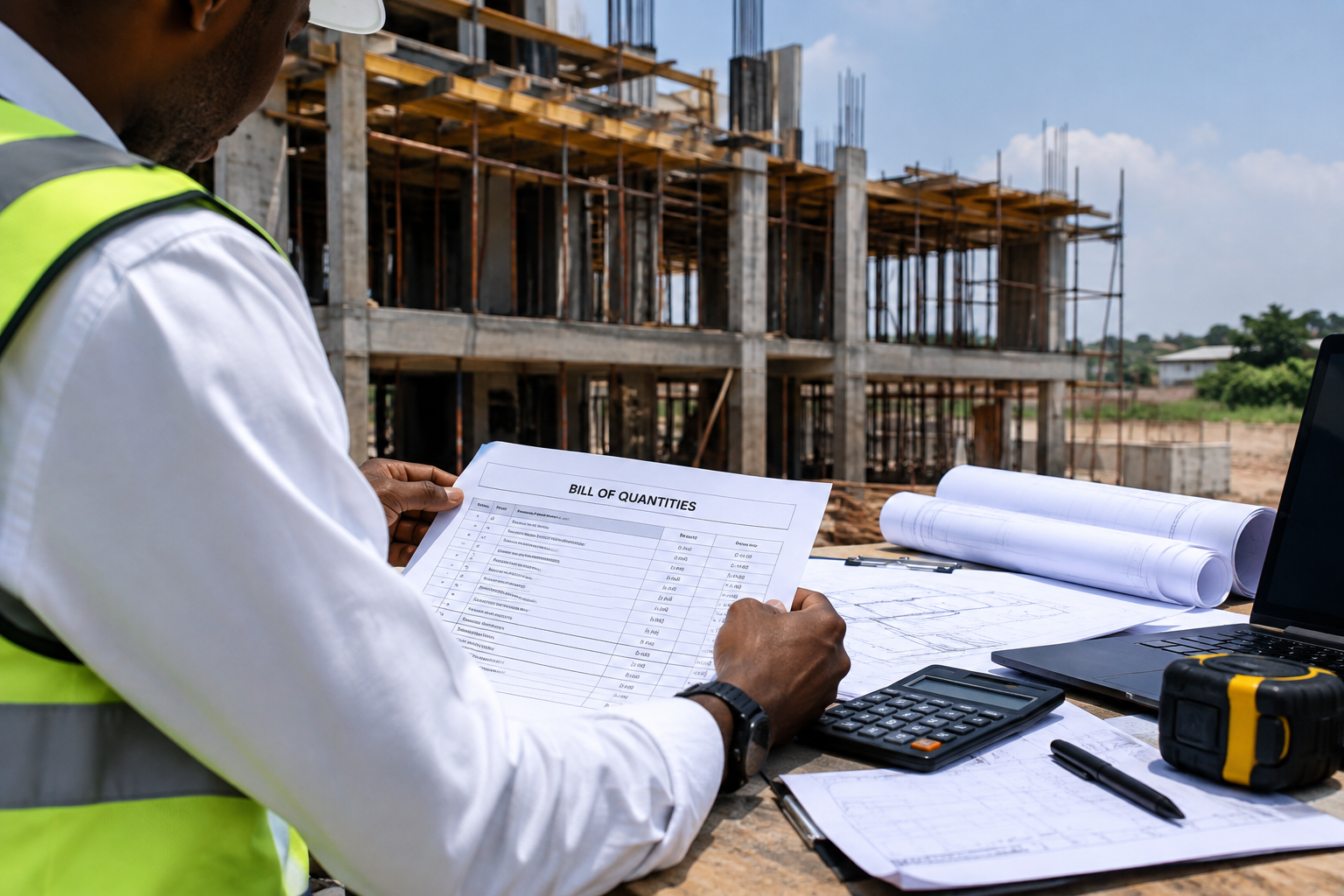
Understanding its role in effective property development.
A Bill of Quantities (BoQ) is an essential document in construction and property development. It
provides a detailed breakdown of the materials, labor, quantities and associated costs required
to execute a construction project.
For property owners and prospective developers, having a properly prepared Bill of Quantities
provides a clearer understanding of the financial obligations attached to a project and facilitates
more effective cost management.
Why Is a Bill of Quantities Important?
1] Accurate Cost Estimation
A Bill of Quantities provides a structured basis for estimating the overall cost of a construction
project. It enables the developer to ascertain the financial requirements of the project before
substantial expenditure is committed.
2] Effective Budget Management
Construction projects can become financially demanding when expenses are not properly
anticipated. A BoQ helps establish a comprehensive budget and provides a framework for
monitoring expenditure throughout the development process.
3] Procurement of Materials
A detailed BoQ identifies the materials and quantities required for the project. This facilitates
more organised procurement and helps reduce unnecessary purchases, wastage and avoidable
expenditure.
4] Contractor Evaluation
When engaging contractors, a Bill of Quantities provides a common basis upon which quotations
and tenders can be prepared and assessed. This makes it easier for a property owner or
developer to compare proposed costs and understand the scope of work being priced.
5] Cost Control During Construction
A BoQ serves as an important reference throughout the construction process. It allows project
stakeholders to monitor the progress of work against the estimated quantities and costs, helping
to identify significant variations where they arise.
6] Better Project Planning
Beyond costing, a properly prepared Bill of Quantities contributes to effective project planning. It
gives the developer a clearer picture of the resources required to actualise the proposed
development.
Conclusion
Whether you are developing a residential property, commercial estate or investment portfolio,
proper financial and technical planning is fundamental to achieving a successful project.
A Bill of Quantities provides the structure required to ascertain project costs, facilitate
procurement, manage expenditure and maintain greater financial control throughout the
development process.
At Dupine Properties, we understand that successful real estate development goes beyond
acquiring an asset it requires proper planning, professional assessment and strategic
execution.
Need professional guidance for your next property development? Contact Dupine Properties

